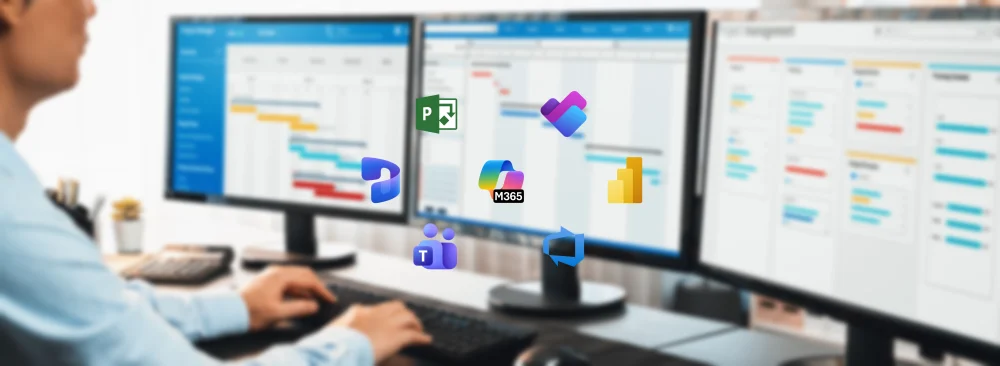
In many organisations, Microsoft Project Server and Project Online still underpin project and portfolio management. These platforms have been reliable for years. However, Microsoft’s strategy for project and portfolio management has fundamentally changed.
What was once a single integrated platform has evolved into a role-based ecosystem that separates execution, planning, governance and reporting across multiple products. This shift has direct financial, operational, and risk implications for organisations that do not adapt in time.
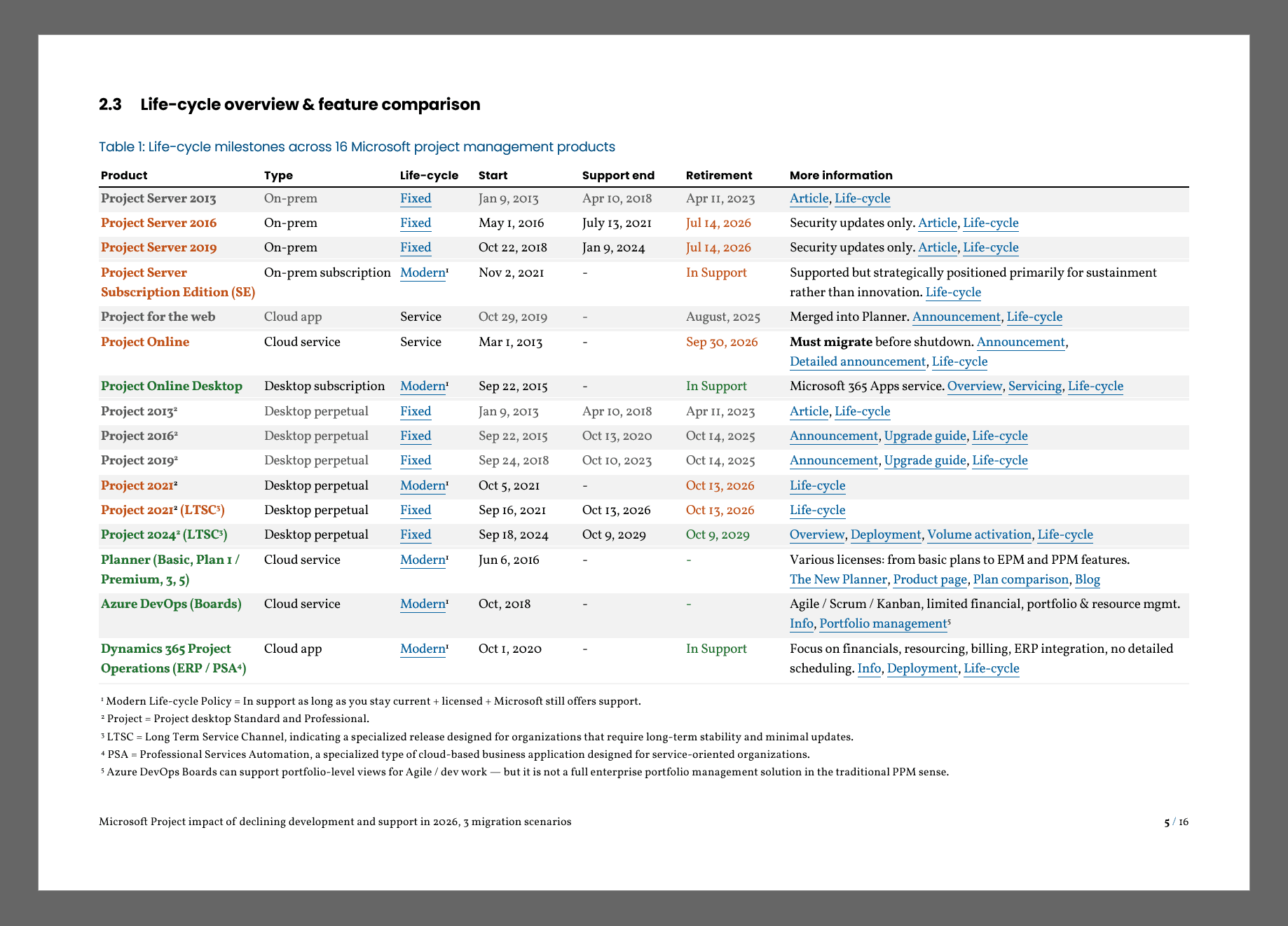
Table 1 – Life-cycle milestones across 16 Microsoft project management products
This life-cycle table – also included in the free whitepaper (no registration required) – makes the transition visible at a glance, showing 16 Microsoft project management products and their support timelines side by side. In the whitepaper, on the page thereafter you will find “Table 2 – Focus on decision-relevant capabilities of 8 active products, not an exhaustive list”.
This is where “waiting a bit longer” stops being a neutral option.
Whitepaper
To support executive decision-making, I have published a whitepaper that explains what this change means in practice – and how organisations can respond in a controlled, future-proof way.
From tool replacement to operating model change
A common assumption is that moving away from Project Server or Project Online is a technical exercise: replace the platform, migrate the data, and continue operating as before. In practice, this approach often increases cost and complexity while delivering limited business value.
For many organisations this therefore becomes a governance decision rather than a purely technical migration. Choices about tooling directly influence how project portfolios are governed, how information flows between teams, and how leadership gains visibility into delivery performance.
Microsoft’s modern project and portfolio management model is based on:
- Different tools for different roles
- Reduced customisation and lower technical debt
- Clear separation between delivery, control, governance, and insight
This means the transition is not about feature parity, but about modernising the project operating model. Organisations that attempt a one-to-one functional replacement typically encounter:
- Low adoption and limited return on investment
- Escalating support and maintenance costs
- Recreated legacy risks in a new technical landscape
The whitepaper explains how to avoid these outcomes and where executives should deliberately not migrate existing functionality.
What executives will find in the whitepaper
The whitepaper is written for boards, CFOs, CIOs, and senior management who require clarity rather than technical detail. It provides:
- An overview of the current Microsoft project and portfolio management landscape
- Lifecycle and support implications for Project Server and Project Online
- Three pragmatic migration paths aligned to organisational scale and governance maturity
- Indicative cost and risk considerations, including total cost of ownership
- Clear guidance on what should be retired rather than rebuilt
The emphasis is on decision-making, risk control, and financial sustainability.
Discussing implications for your organisation
If you would like to discuss the implications for your organisation, validate assumptions, or explore next steps following the whitepaper, you are welcome to get in touch.
Every organisation faces different constraints: portfolio complexity, governance maturity, and existing customisation levels all influence the most appropriate path forward.
Why this requires action now
With Project Online scheduled to stop and Project Server approaching the end of its strategic product life, the window for controlled decision-making is narrowing. Deferring decisions beyond 2026 typically leads to:
- Higher run costs
- Increased security and compliance exposure
- Reduced flexibility and higher change costs later
The key question for executives is no longer whether change is required, but how deliberately and on what timeline it will be addressed.